
The right Investment Starts with the Right Planning.
Self-storage facilities have become an important part of commercial real estate, offering individuals and businesses flexible solutions for their storage needs. As communities grow and storage needs evolve, developers continue to explore opportunities within the industry.
But with changing market conditions, construction costs, and increased competition in certain areas, many potential investors are asking the same question: Is now the right time to build a self-storage facility?
The answer depends on several factors, including location, demand, budget, and long-term investment goals. Before breaking ground, it's important to understand what makes a self-storage development successful.
Understanding the Current Self-Storage Market
The self-storage industry continues to evolve as developers respond to changing demand and market conditions.
In 2026, new self-storage construction has slowed nationwide. According to industry research from Yardi Matrix, new supply is expected to decline compared to 2025, while rental performance continues to vary by market.
For developers, this creates an important consideration: fewer new facilities entering the market may present opportunities in certain locations, but not every area has the same demand.
Before investing, it's essential to research the local market, evaluate existing facilities, and determine whether additional storage space is needed.
Location Is Everything
One of the most important factors in a successful self-storage development is choosing the right location.
Population growth, residential development, local businesses, and accessibility can all influence demand for storage facilities.
When evaluating a potential site, developers should consider:
Population and housing growth: Are more people moving into the area?
Existing competition: How many storage facilities are already nearby?
Accessibility: Is the property easy for customers to reach?
Property requirements: Does the site allow for storage development under local zoning regulations?
Future expansion: Is there room to accommodate additional units as demand grows?
A strong location combined with a well-planned facility can help position a development for long-term success.
Choosing the Right Type of Storage Facility
Not all self-storage facilities are built the same. Understanding the needs of your target market can help determine which type of facility makes the most sense.
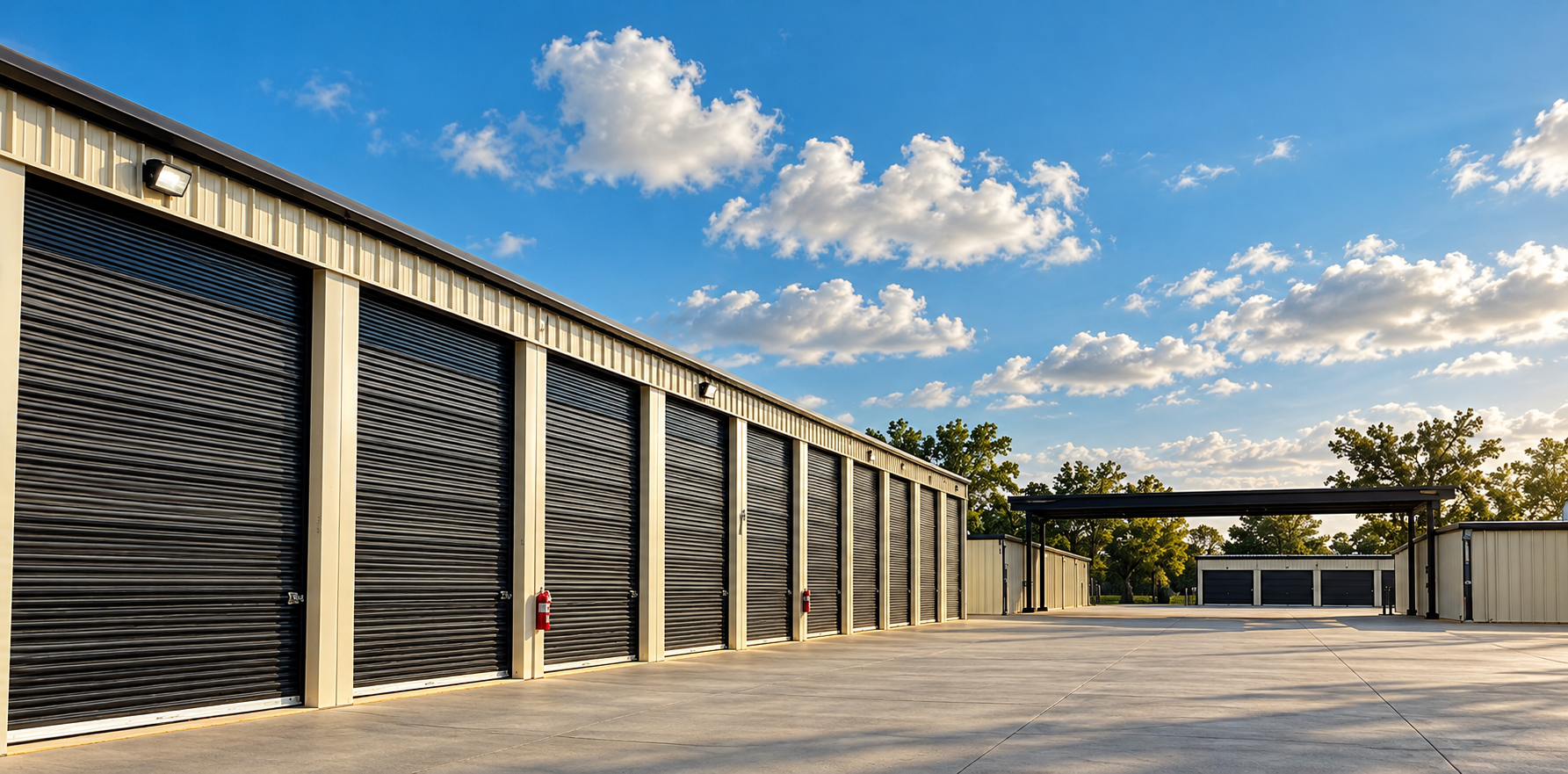
Traditional self-storage buildings remain a common choice, providing individual units for personal and commercial storage.
However, developers may also consider additional options, such as covered RV and boat storage, to meet specific customer needs.
At Wilshar Steel, our self-storage construction capabilities include traditional storage buildings and Shadecaster covered parking structures, designed to provide covered parking solutions for RVs, boats, and vehicles.
Choosing the right building type and layout early in the process can help developers maximize their available space and better serve their market.
Understanding Construction Costs
Construction costs play a major role in determining whether a self-storage project is financially feasible.
Land preparation, materials, labor, utilities, and site requirements all contribute to the overall investment. Costs can vary significantly depending on the facility's size, design, location, and features.
Proper planning is essential to keeping a project on budget and avoiding unnecessary expenses.
Working with an experienced steel contractor early in the development process can help identify building requirements, evaluate construction options, and coordinate important project details before construction begins.
Planning for Long-Term Growth
A successful self-storage facility should be designed with both current demand and future opportunities in mind.
As surrounding communities develop, storage needs may change. Planning for potential expansion can give facility owners greater flexibility as their businesses grow.
Developers should consider building layouts, access roads, drainage, and available land when planning future phases.
Taking these factors into account from the beginning can help simplify future expansion and reduce the need for costly modifications.
Working With the Right Construction Partner
Choosing the right contractor is an important step in bringing a self-storage development to life.
Experience, communication, quality workmanship, and an understanding of the construction process can all make a difference in a project's success.
At Wilshar Steel, we specialize in self-storage construction, providing design and erection services for projects nationwide.
With in-house fabrication and erection capabilities, our team understands the importance of coordination, efficiency, and dependable construction.
Whether you're planning a new facility or expanding an existing property, involving an experienced steel contractor early can help establish a strong foundation for your project.
So, Is Now the Right Time to Build?
There isn't a one-size-fits-all answer.
While the self-storage industry continues to offer development opportunities, the right time to build depends on your local market, financial goals, and project readiness.
Researching demand, understanding construction costs, and developing a clear plan are essential steps before making an investment.
For developers who have identified a strong market opportunity, proper planning and the right construction team can make all the difference.
Have a Self-Storage Project in Mind? Let's Talk.
At Wilshar Steel, we're committed to helping developers bring their self-storage projects to life through quality construction and experienced project coordination.
Whether you're starting from the ground up or planning an expansion, contact Wilshar Steel today to discuss your next self-storage project.